Cumberland County is wet air. A heat pump that only “makes it 72°” and leaves the house clammy did not finish the job.
Cooling is two things at once: dropping the air temperature and wringing water out of it. The coil has to stay cold long enough for moisture to condense and go down the drain. Short, hard bursts — oversized equipment, a thermostat that yanks the system on and off — cool the thermostat and leave the furniture damp.
What “long runtime” actually means
On a 98° Fayetteville afternoon, a right-sized heat pump should run a long time. That is not a defect. Long, steady runtime is how humidity leaves. If it short-cycles and the upstairs still feels sticky, we look at airflow, charge, and whether the unit was sized off a square-footage guess.
What you can check without gauges
- Filter: hold it to a window. Little light = restricted coil = less dehumidifying.
- Supply vents in the rooms you actually use: open.
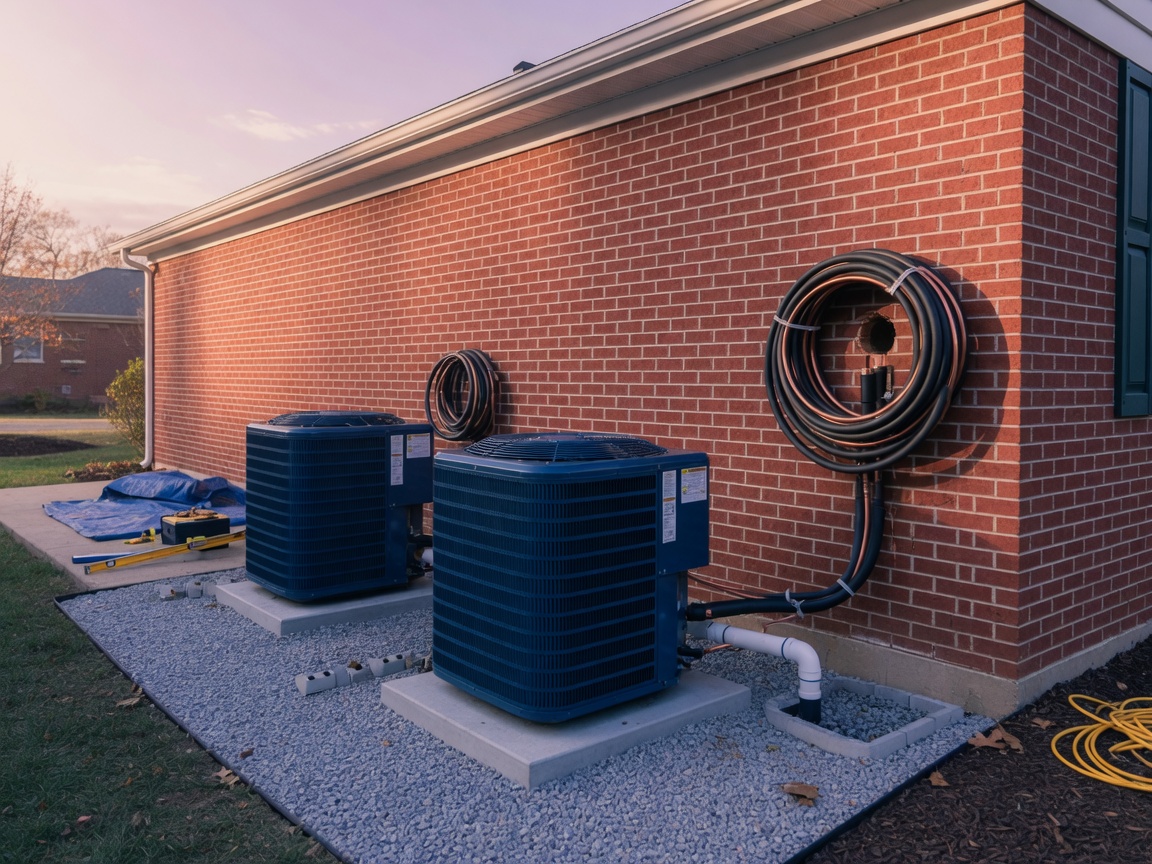
- Outdoor unit: about two feet of air around it. Cottonwood and grass bags against the coil raise head pressure and cut capacity.
If the air at the vent is only a little cooler than the hallway after ten minutes, that is a real split problem — not “the house is just humid.” The Toolbox walks that check. Ice on the copper with a dirty filter is usually airflow. Ice with a clean filter and the outdoor fan spinning is a visit.
We do not sell a humidity gadget to hide a starved coil. Fix airflow first, then talk IAQ.
Book a visit if the house hits setpoint and still feels wet.